-
Contact CPH | Agent Login
My Booking
Holidays
Services
Newsletter
-
Discover North Cyprus
Welcome to our North Cyprus...
With less than one tenth of the visitors that swarm to the southern resorts like Paphos, in Northern Cyprus the locals still outnumber the visitors and the north is considered not only the most beautiful part of Cyprus, but one of the best of all the Mediterranean resorts.
The geography means you can spend the morning by the sea indulging your tan, take lunch in a mountain-top taverna enjoying the spectacular views and then spend an afternoon exploring some of the most incredible historical sites the whole Mediterranean region has to offer. The possibilities are endless.
Northern Cyprus enjoys over 300 days of uninterrupted sunshine, clear blue unpolluted seas, the beauty of an unspoiled landscape and uncrowded beaches. Add to this the friendliness and hospitality of the people, wonderfully varied cuisine and you have the perfect recipe for a truly idyllic holiday. The 200 miles of beautiful coastline, secluded coves and constant golden sands. A mystical land with an abundance of scenic sights and historical monuments. Superb local cuisine and the overwhelming friendliness of the local assures a warm welcome, ensuring that you leave with the firm intention of returning time and time again.
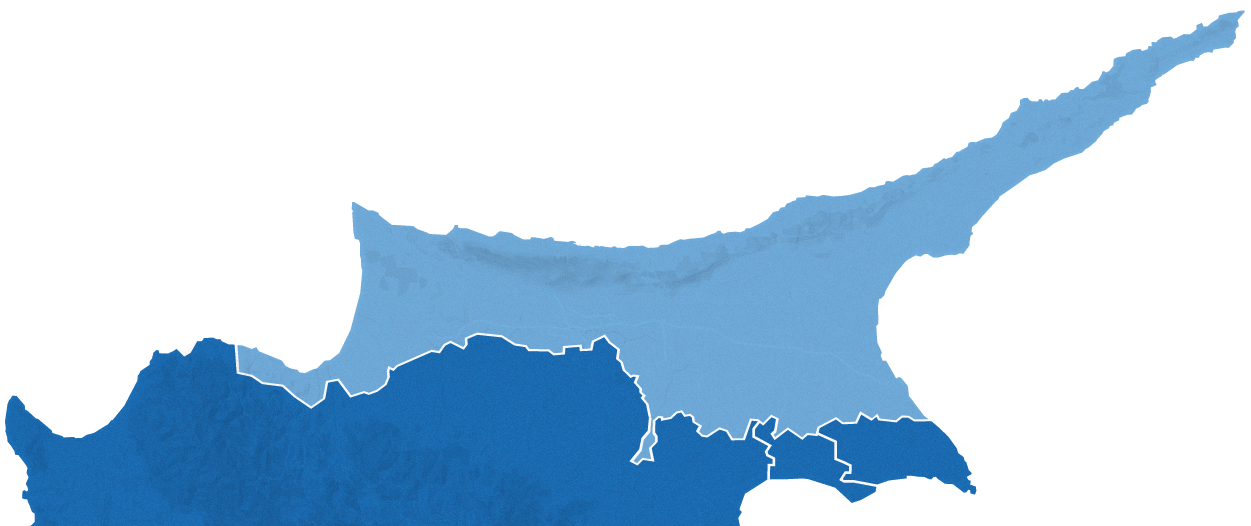
The island of Cyprus is located in the Eastern Mediterranean. Its nearest neighbour is Turkey, some 40 nautical miles north. To the east of the island the mountain range loses height as it extends along the narrow peninsula known as Karpas or ‘The Panhandle’.Along it one finds the best beaches in Cyprus. Miles of empty bays with pure white sand. The resort town of Kyrenia is on the northern coast, and the second resort town of Famagusta in the east. Quite apart from the huge range of cultivated flowers, Northern Cyprus and especially the Karpas peninsula is a rich botanical area with literally hundreds of species of wild flowers. From February to June many areas of Northern Cyprus are carpeted with colourful wild flowers. Wildlife include birds, butterflies, lizards and the loggerhead and green turtle still come ashore to lay their eggs on Northern Cyprus’ unspoiled beaches.
Historical outline
Archaeological excavations show settlements of Neolithic Tribes from 7000 BC, which originated from Anatolia and Mesopotamia. These early settlers established small communities along the coast. Although they used stone vessels they were able to farm and domesticate animals. A new wave of settlers who came after 6000 BC brought pottery skills, the two sites excavated from this age are at Vrysi in the north, 8 miles east of Kyrenia, and Khirokitia half way between Limassol and Nicosia which now remains on the south of the border. Finds from these sites indicate a life of farming, fishing, raising animals and weaving wool. From 2000 BC onwards the island’s strategic location for trade and defence and its copper resources, drew neighbouring powers to dominate Cyprus one after the other, to the present day. This has brought Cyprus a mosaic of cultural influences and made the island a treasure chest of ancient ruins, medieval castles and Abbeys. Food & drink
The cuisine of Northern Cyprus owes its heritage to a mixture of Mediterranean and oriental influences. Local dishes are good and made from natural fresh produce. The ‘Meze’ is a speciality of Cyprus and consists of a large number of cold and hot hors d’oeuvres such as different salads, meats, vegetables and sea food. It is either taken as an appetiser or as a main course. Other typical dishes of the region are Shish kebab (marinated lamb skewered and grilled over charcoal), Yalanci Dolma (wine leaves stuffed with rice onions and tomatoes. Sheftali kebab (spicy minced lamb wrapped in skin and cooked on charcoal) Musakka (layers of mince, potato aubergines and courgettes baked in the oven with melted cheese topping). Typical sweet desserts are Lokum (Turkish Delight), Baklava (mille feuille pastry, nuts, honey and syrup), Halva (flour, sugar, and ground sesame seeds). Northern Cyprus produces a variety of local brandies and the aniseed based ‘Raki’ which is famous in the region. These are the perfect accompaniment to the local dishes. European beer is also produced locally under licence. Gold Fassl and Altinada Pills are good local beers. In addition to the local produce, restaurants and hotels offer a wide range of wines, beers and spirits imported from the Turkish mainland and Europe. Soft drinks are widely produced and consumed locally. One traditional way to finish your meal is a small cup of Turkish coffee.Evening entertainment
Night life in Northern Cyprus is generally restricted to a small number of nightclubs with a good selection of restaurants. There are good opportunities for eating out from major hotel restaurants serving international dishes to small Bistro like restaurants, which offer typical Turkish- Cypriot cuisine and is relatively cheap compared with Southern Cyprus or Europe. Kyrenia Harbour is an ideal place to dine in a picturesque surrounding. Many hotels and larger restaurants will stage live music and/or local shows during the summer season.Language Turkish is the official language of Northern Cyprus, and is fiendishly difficult for foreigners to become proficient in but, fortunately, English is widely understood.Passport & Visa
All visitors except Turkish citizens need a valid national passport for entry to Northern Cyprus. British Passport holders do not need a visa.Climate
The climate of Northern Cyprus is typically Mediterranean. Summers (Jun to Sep) are hot and dry; winters (Nov to Mar) are moderately rainy, with a mild temperature. Spring and autumn are warm and pleasant. The average annual temperature is 20 °C (68F).Summer temperatures average 30 °C (90F) with the coldest months of Jan and Feb 10 °C (50F).